
Building a niche in digital marketing is one of the most important steps for freelancers and professionals looking to stand out in a crowded industry. With endless opportunities—from SEO and social media management to content creation, paid advertising, email marketing, and influencer campaigns—choosing the right niche can feel overwhelming.
Your niche determines the clients you attract, the skills you focus on, the services you provide, and the reputation you build. By building a niche in digital marketing that aligns with your strengths, interests, and long-term goals, you position yourself as an expert in a specific area, differentiate from competitors, and create a career that is both fulfilling and financially rewarding. A well-defined niche offers clarity, direction, and a solid foundation for sustained growth in today’s competitive digital marketing landscape.

Why Niching Down Matters
Why Niching Down Matters
Many beginners in digital marketing make the mistake of positioning themselves as a “jack of all trades,” offering a broad range of services to appeal to everyone. While this may seem like a safe approach, it often makes it harder to stand out in a crowded market and attract clients who are willing to pay for specialized expertise. By building a niche in digital marketing, you can:
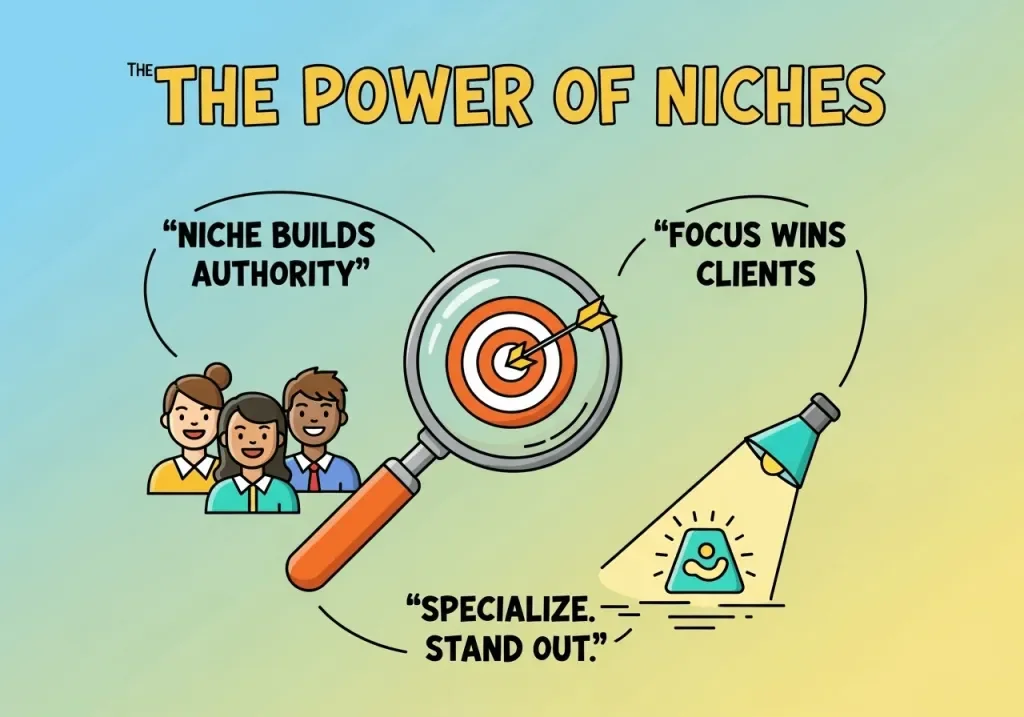
Differentiate Yourself from Competitors: Focusing on a particular area of digital marketing allows you to develop deep expertise that sets you apart from generalists.
When clients see a freelancer with specialized skills, they are more likely to trust your capabilities and choose you over someone with a broader, less defined skill set. By building a niche in digital marketing, you can:
Attract Ideal Clients: Niching down helps you target clients who are specifically seeking the services you excel at. By tailoring your messaging and portfolio to a focused audience, you increase the likelihood of connecting with clients who value your unique expertise and are willing to invest in your services.
Command Higher Rates: Specialization positions you as an expert rather than a generalist, which allows you to justify premium pricing.
Clients often perceive specialists as more knowledgeable and capable, making them more willing to pay higher rates for services that promise better results. Building a niche in digital marketing allows you to focus on projects aligned with your interests and strengths, enabling you to work on projects you are passionate about. This not only improves the quality of your work but also leads to greater job satisfaction, motivation, and long-term career fulfillment. By intentionally choosing a niche, freelancers can strategically position themselves for success, attract the right clients, and create a career that is both financially rewarding and personally satisfying.
Steps to Choose the Right Digital Marketing Niche
Steps to Choose the Right Digital Marketing Niche The digital marketing industry is vast, offering endless opportunities for freelancers and professionals. From SEO to social media, content marketing, email campaigns, and paid advertising, the possibilities are nearly limitless. However, this abundance of options can make it challenging to decide where to focus your efforts. Choosing the right niche is one of the most important steps in building a successful and sustainable digital marketing career. By specializing in a particular area, you can stand out from the competition, attract your ideal clients, and command higher rates for your services. Here’s a step-by-step guide to help you identify and choose the right digital marketing niche for your freelance career.
1. Identify Your Strengths and Interests
The first step in finding your ideal niche is understanding yourself—your skills, interests, and strengths. Ask yourself questions like:
-
What aspects of digital marketing do I enjoy the most?
-
Do I prefer creative tasks such as content creation, design, or storytelling?
-
Am I more drawn to analytical work, like SEO audits, PPC campaigns, or data analysis?
-
Which skills do I already excel in, and which areas do I enjoy learning more about?
By taking the time to reflect on your personal preferences, strengths, and interests, you can make a more informed decision when building a niche in digital marketing—one that not only aligns with your existing talents but also keeps you motivated, engaged, and inspired over the long term. Selecting a niche that resonates with you ensures that your work feels meaningful and enjoyable rather than routine or forced.
For instance, if you have a passion for writing, storytelling, and creating compelling content, a focus on content marketing could be an ideal fit, allowing you to channel your creativity into blogs, social media campaigns, and brand narratives. On the other hand, if you are analytically minded, enjoy working with numbers, and thrive on interpreting trends, areas like SEO, paid advertising, or data-driven marketing strategies could become your sweet spot.
When building a niche in digital marketing, your chosen niche should act as a natural extension of your existing skills while also providing opportunities for growth. It’s about leveraging what you already do well and combining it with new learning experiences that expand your capabilities. The more genuinely interested and passionate you are about your niche, the higher your chances of excelling, building authority, and sustaining long-term success. Ultimately, aligning your niche with both your strengths and your interests allows you to create a fulfilling career, maintain motivation through challenges, and stand out in a competitive market.
2. Research Market Demand
Once you have a clear understanding of your personal interests and strengths, the next critical step in building a niche in digital marketing is to research the market demand for potential areas. While aligning with your passions is important, not all niches offer the same level of opportunity or profitability. Focusing on a niche with limited demand or few clients can make it challenging to secure work and grow your business. To make an informed choice, it’s essential to identify areas where businesses consistently require support—whether it’s ongoing SEO services, content creation, social media management, email marketing, or paid advertising campaigns.
Analyzing market trends, competitor offerings, and client needs can help you gauge which niches have sustainable demand and growth potential when building a niche in digital marketing. This research allows you to balance your personal strengths with the practical realities of the market, ensuring that the niche you choose not only aligns with what you enjoy and excel at but also positions you for long-term success. By focusing on areas where businesses actively seek assistance, you increase your chances of attracting clients, building a reputation, and establishing a profitable, rewarding career.
Here are some examples of high-demand niches:
- Local SEO for Small Businesses: Many small businesses rely on local search visibility to attract clients in their area, creating consistent demand for SEO specialists.
- Social Media Marketing for E-commerce: E-commerce brands need help running ads, growing their social media presence, and converting followers into buyers.
- Email Marketing for SaaS Companies: Subscription-based businesses depend on nurturing leads and reducing churn through effective email campaigns.
- Influencer Marketing for Lifestyle Brands: Lifestyle brands often require help identifying influencers, managing campaigns, and measuring results.
To effectively evaluate which digital marketing niches have strong demand, it’s important to leverage a variety of research tools and platforms when building a niche in digital marketing. Tools like Google Trends can help you track the popularity of specific topics over time, revealing emerging trends and areas of growing interest. Keyword research platforms allow you to see which search terms and phrases businesses are actively targeting, providing insight into the demand for particular services.
Additionally, freelance job boards and marketplaces such as Upwork, Fiverr, or LinkedIn can offer a real-world snapshot of which niches clients are frequently hiring for, while social media insights can reveal audience engagement, trending topics, and content gaps in different industries.
By combining data from these sources, you can identify niches where businesses are actively seeking freelance support, ensuring that your chosen focus area has a steady stream of potential clients. This approach not only helps you align your skills and interests with market demand but also increases your chances of building a niche in digital marketing that is sustainable and profitable. The goal is to choose a niche that strikes a balance between your personal strengths and the practical needs of the market, positioning you for consistent opportunities and long-term growth.
3. Analyze the Competition
Once you’ve identified potential niches that align with your skills and interests, the next crucial step in building a niche in digital marketing is to analyze the level of competition within those areas. Even if a niche has strong demand, entering a market that is overly broad or saturated can make it difficult to differentiate yourself and attract clients. For example, marketing yourself simply as a “social media marketer” places you in a highly competitive field where countless professionals are offering similar services. Without a clear point of distinction, it can be challenging to stand out and secure consistent work.
To overcome this, consider narrowing your focus to a specific sub-niche within the broader category. For instance, instead of targeting all social media marketing, you might specialize in Instagram content strategy for fitness brands or LinkedIn lead generation for B2B businesses. By honing in on a more defined area, you position yourself as a specialist rather than a generalist, which can make your expertise more appealing to clients and reduce competition.
Analyzing competitors’ strengths, offerings, and gaps in the market can also help you identify opportunities where your unique skills, approach, or experience can provide real value. This strategic focus not only improves your chances of standing out but also allows you to command higher rates and build a reputation as the go-to expert in your chosen niche. such as:
-
Instagram marketing for beauty brands
-
Facebook ads for e-commerce businesses
-
LinkedIn lead generation for B2B SaaS
By choosing a more specific niche, you can position yourself as an expert in a targeted area rather than competing with thousands of generalists. This makes it easier to attract your ideal clients and build a reputation as a go-to specialist.
Analyzing competitors is a critical step in building a niche in digital marketing because it allows you to identify gaps in the market and discover opportunities to differentiate yourself. Take the time to study what services other freelancers or agencies are offering, how they position themselves, and the types of clients they attract. Pay attention to their strengths as well as areas where they may fall short or fail to fully address client needs. By understanding these dynamics, you can pinpoint opportunities where you can provide a unique angle, offer specialized expertise, or deliver added value that others are overlooking.
This strategic approach not only helps you refine your service offerings but also positions you to stand out in a crowded market. For example, when building a niche in digital marketing, you might notice that many social media marketers focus on content creation but rarely provide analytics reporting or audience growth strategy. By addressing that gap, you create a niche that clients perceive as both valuable and distinct. Ultimately, competitor analysis is more than just benchmarking—it’s about discovering where your unique skills and approach can meet unmet needs, giving you a competitive edge and helping you carve out your own space in the digital marketing industry.
4. Consider Profitability
It’s not enough to choose a niche you enjoy—you also need to consider whether it’s financially viable. Ask yourself:
-
Are businesses in this niche willing and able to pay for marketing services?
-
What is the typical budget range for clients in this industry?
-
Does this niche have the potential to provide consistent, long-term income?
When building a niche in digital marketing, it’s important to consider the budget and marketing potential of different industries, as this can directly impact the profitability and sustainability of your freelance work. Certain industries, such as SaaS (Software as a Service), e-commerce, and health and wellness, often allocate larger budgets for marketing, making them particularly lucrative for freelancers who can deliver measurable results. These sectors typically invest in ongoing campaigns, digital strategy, and analytics, providing freelancers with opportunities to secure long-term projects and higher-paying clients.
On the other hand, when building a niche in digital marketing, industries like small local businesses, startups, or niche service providers may have more limited marketing budgets. While these clients might not offer the same financial scale as larger companies, they still present valuable opportunities for freelancers who can provide cost-effective, scalable, or high-impact solutions. Working with these clients can also allow for more creative flexibility, faster decision-making, and the chance to build strong case studies that demonstrate tangible results.
By understanding the financial dynamics and marketing priorities of different industries, freelancers can make more informed decisions when building a niche in digital marketing, strategically choosing areas that balance profit potential, expertise, and growth opportunities, ensuring both sustainability and career satisfaction.
By assessing profitability early on, you can avoid investing time and effort into niches that may not sustain your freelance business in the long run. Your goal is to find a balance between passion, skill, and financial viability.
5. Test Before You Commit
You don’t have to decide your niche immediately. Many successful freelancers test different areas before fully committing. Start by taking on small projects in a few potential niches and observe:
-
Which types of projects do you enjoy working on the most?
-
Where do you see the best results for clients?
-
Which clients are easiest to work with and most willing to pay for your services?
Over time, as you explore different projects, industries, and client types, patterns will begin to emerge that reveal which niche aligns best with your skills, interests, and the demands of the market. Engaging in this exploratory phase allows you to experiment with various strategies, tools, and approaches, giving you firsthand experience of what works and what resonates most with clients. By testing multiple niches, you gain valuable insights into your strengths, preferred work style, and areas where you can add the most value.
This iterative process also helps you build confidence as you accumulate experience and see tangible results from your efforts. Additionally, it provides an opportunity to refine your portfolio, showcasing your successes and lessons learned in a way that clearly communicates your expertise to potential clients or employers. By approaching building a niche in digital marketing as a process of experimentation rather than a one-time decision, you can make a more informed, strategic choice that maximizes both your professional satisfaction and long-term career success.
Remember, niching down doesn’t mean limiting yourself forever. You can always expand your services later once you’ve established credibility and expertise in your primary niche.
Examples of Profitable Niches in Digital Marketing
To give you a clearer idea, here are some examples of profitable niches in digital marketing:
-
SEO for Local Businesses: Helping local businesses rank higher in search engines to attract nearby customers.
-
Social Media Ads for E-commerce Brands: Running paid campaigns that drive sales and conversions for online stores.
-
Content Marketing for Startups: Creating blogs, guides, and social media content to build brand authority and attract leads.
-
Video Marketing for Online Education: Producing video campaigns, tutorials, and ads for e-learning platforms.
-
Influencer Campaigns for Fashion and Lifestyle Industries: Identifying influencers, managing collaborations, and measuring campaign ROI.
Each of these niches has strong demand, clear target audiences, and opportunities for specialization. By selecting one that aligns with your skills and interests, you can position yourself as an expert and attract clients willing to pay for your specialized services.
Final Thoughts
Building a niche in digital marketing is a critical step in creating a successful freelance career. By identifying your strengths and interests, researching market demand, analyzing the competition, considering profitability, and testing different areas, you can make an informed decision that sets you up for long-term success.
A well-chosen niche allows you to differentiate yourself from competitors, attract your ideal clients, command higher rates, and work on projects you genuinely enjoy. It’s not just about picking a profitable area—it’s about aligning your skills, passions, and market needs to create a sustainable, fulfilling freelance career.
Remember, building a niche in digital marketing is an evolving process. Start with what feels like the best fit today, gain experience, and refine your focus as you grow. By taking a strategic approach to niching down, you position yourself as a trusted expert, stand out in a crowded market, and create opportunities for growth and long-term success.