
Digital marketing portfolio tips are essential for beginners who often struggle with building credibility in a competitive industry. One of the biggest challenges is the expectation that potential clients or employers want to see a strong portfolio showcasing proven results. For newcomers, this can feel like a classic catch-22—you need experience to land opportunities, yet you need those opportunities to gain the experience that builds a portfolio. This dilemma often leaves aspiring digital marketers wondering: “What can I actually showcase if I haven’t worked with clients yet?”
The reassuring truth is that creating a strong, compelling portfolio when you’re new to the field is far from impossible. What matters isn’t whether you’ve worked for big-name clients or well-known brands—it’s about how you present your skills, resourcefulness, and ability to apply marketing strategies effectively. Employers and clients aren’t just looking for a history of employment; they want to see evidence that you understand fundamental marketing principles and can use them to craft creative, results-driven campaigns. By following these digital marketing portfolio tips—highlighting personal projects, case studies, or even volunteer work—you can effectively demonstrate your expertise and creativity, building a portfolio that stands out even without a long professional track record.
Instead of seeing your lack of formal experience as a limitation, view it as a creative opportunity. You can build portfolio pieces through personal projects, simulated campaigns, case studies based on well-researched scenarios, or even volunteer work for small businesses and nonprofits. Each of these examples has the power to demonstrate your style, problem-solving approach, and potential impact. By strategically curating these projects, you create a professional digital marketing portfolio for beginners that doesn’t just show where you’ve been—it highlights where you’re capable of going.
Digital Marketing Portfolio: Ultimately, what clients and employers want most is confidence that you can approach challenges thoughtfully and deliver meaningful outcomes. A digital marketing portfolio that communicates your creativity, initiative, and ability to learn quickly is often more valuable than one padded with superficial experience. By focusing on quality over quantity and showcasing the skills you already possess, you can transform the challenge of being a beginner into an opportunity to stand out. Your portfolio then becomes not only a reflection of your current abilities but also a promise of the marketer you are becoming, elevating your chances of success in this competitive industry.

Why a Portfolio Matters in Digital Marketing
A digital marketing portfolio is far more than a simple collection of completed tasks or a chronological list of past projects—it serves as tangible evidence of your skills, creativity, and capacity to achieve real, measurable results. In an industry as competitive and fast-paced as digital marketing, where countless professionals are competing for the same clients or positions, a well-crafted portfolio acts as your personal brand ambassador. It communicates, at a glance, not just what you have done but also the quality of your work, the strategic thinking behind it, and the value you can deliver to potential clients or employers.
Beyond merely showcasing accomplishments, a portfolio tells a compelling story about your professional journey. It highlights your unique style, problem-solving abilities, and the innovative approaches you employ to overcome challenges. By including case studies, analytics-driven results, and creative campaigns, you demonstrate how your strategies translate into tangible outcomes—whether that’s increasing engagement, driving leads, or boosting sales. Additionally, your portfolio allows you to differentiate yourself in a crowded marketplace, illustrating not only your technical skills but also your understanding of audience needs, market trends, and business objectives.
Ultimately, a strong digital marketing portfolio is both proof of expertise and a narrative tool. It builds credibility, instills confidence, and makes a persuasive case for why clients or employers should trust you to deliver results. A well-crafted digital marketing portfolio transforms abstract claims into concrete evidence, turning your professional achievements into a story that is as engaging as it is convincing.
Here’s why a digital marketing portfolio is so essential for every aspiring or experienced digital marketer:
Showcase your skills with real examples.
A digital marketing portfolio enables you to go beyond theoretical knowledge and showcase how you apply digital marketing principles in real-world scenarios. Rather than simply stating that you understand concepts like SEO, social media marketing, content strategy, or paid advertising, a portfolio gives you the opportunity to demonstrate your skills through tangible examples. This can include live campaigns you’ve managed, mock projects created to highlight your strategic thinking, or detailed case studies showing measurable results such as increased traffic, engagement, or conversions. By providing concrete evidence of your work, you make your expertise more credible and persuasive.
Moreover, a digital marketing portfolio highlights your problem-solving abilities and strategic approach, showing potential clients or employers how you think, plan, and execute campaigns from start to finish. It allows you to communicate not just what you know, but how effectively you can use that knowledge to achieve real outcomes. This combination of practical demonstration and documented success makes your digital marketing portfolio more impactful, helping you stand out in a competitive market and giving decision-makers confidence in your ability to deliver results.
Build credibility with potential clients or employers.
Trust is one of the most critical factors influencing a client’s decision to hire a freelancer or a company’s choice to bring someone on board. In an industry where skills and promises are abundant, demonstrating reliability and competence becomes essential. A well-designed, polished, and detailed portfolio instantly reassures prospects that you are not only capable but also dependable. It shows that your expertise is backed by real-world application, highlighting strategies you have not only developed but also executed successfully.
By showcasing actual projects, campaign results, and measurable outcomes, your portfolio provides concrete proof of your abilities, reducing uncertainty and skepticism. This tangible evidence builds credibility and signals professionalism, making potential clients feel more confident about entrusting you with their business objectives. In essence, a thoughtfully curated portfolio does more than display skills—it cultivates trust, establishes authority, and can significantly increase the likelihood that prospects will choose to work with you over competitors.

Differentiate yourself from competitors.
Digital marketing is an increasingly crowded field, where many professionals often appear similar on paper in terms of education, certifications, and basic skills. In such a competitive environment, a well-crafted portfolio becomes a powerful differentiator, allowing you to showcase what truly sets you apart. It’s not just a record of completed projects—it highlights your unique qualities, whether that’s your creative flair, innovative problem-solving, industry-specific knowledge, or ability to make data-driven decisions.
By presenting examples of your work, detailed case studies, and measurable outcomes, a portfolio demonstrates how your personal strengths translate into tangible results. It communicates your professional identity and style in a way that a resume alone cannot, giving potential clients or employers a clear sense of how you approach challenges and deliver value. This personal edge—your distinctive combination of skills, creativity, and strategic thinking—can often be the deciding factor that makes someone choose you over another equally qualified candidate.
Track your growth as a marketer over time.
Your portfolio is not a static collection; it evolves with you. By consistently updating it, you create a record of how your skills, ideas, and results have developed throughout your career. It not only helps you reflect on your progress but also allows future clients and employers to see the trajectory of your growth, demonstrating that you are constantly improving and adapting in a rapidly changing digital landscape.
A strong portfolio, therefore, isn’t just a professional requirement—it’s a strategic asset that builds your reputation, communicates your value, and positions you for long-term success in digital marketing.
What to Include in Your Digital Marketing Portfolio
When you’re just beginning your journey in digital marketing, it’s easy to feel as though you don’t have anything substantial to present in a portfolio. Many newcomers assume that without paying clients, big campaigns, or years of experience, they have nothing worth showcasing. However, that couldn’t be further from the truth. A portfolio in digital marketing is not limited to a list of high-profile clients or big-budget projects—it’s a reflection of your potential, your skillset, and the unique passion you bring to the field.
Even as a beginner, you already possess more valuable material than you might realize. Personal projects, mock campaigns, sample social media strategies, SEO audits, blog posts, or even content you’ve created for your own personal brand can all demonstrate your creativity and marketing ability. Analytical exercises, case studies based on well-known brands, or voluntary work for small businesses, friends, and nonprofits are equally valid additions to a beginner’s portfolio. Each piece you include shows that you don’t just understand the concepts—you can put them into practice.
A strong beginner’s portfolio tells an important story: that you are eager to learn, capable of applying digital marketing principles, and ready to grow into a professional role. More than just documenting where you are now, it acts as a promise of the marketer you’re becoming. By highlighting your skills, resourcefulness, and enthusiasm, your portfolio can open doors to opportunities and help potential clients or employers see the value you bring, even at an early stage in your career.
1. Who You Are
Start by crafting a compelling “About Me” section, as this is often the first place potential clients or employers look to understand who you are beyond just your skills. Think of it as more than just a brief biography—it’s your opportunity to tell a personal story that captures attention and builds connection. Begin with a short introduction that highlights your background, such as your education, early career experiences, or a defining moment that sparked your passion for digital marketing. Sharing what motivated you to enter this field—whether it was helping a local business grow online, discovering the power of analytics, or enjoying the creativity of content creation—adds authenticity and makes your profile more memorable.
After setting the stage, transition into a clear explanation of the specific services you offer. For instance, you might position yourself as an SEO specialist who helps businesses increase organic visibility, a content creator who crafts engaging blogs and social media posts, or a social media manager skilled at building online communities and driving engagement. Defining your expertise upfront ensures readers quickly understand the value you bring.
Keep the tone professional yet approachable, striking a balance between authority and friendliness. Potential clients want to see not only that you’re skilled and knowledgeable, but also that you’re someone they would enjoy collaborating with. A warm, confident, and client-focused “About Me” section can set you apart from the competition and leave a strong first impression that encourages people to learn more about your work and services.
2. Your Toolkit
Next, detail your skills and tools. Think of this as your professional arsenal. List the core digital marketing skills you’ve developed, such as SEO, content writing, social media management, email marketing, or pay-per-click (PPC) advertising. Just as important are the tools you know how to use. Mention platforms like Google Analytics, Canva, SEMrush, or Mailchimp. This shows potential clients that you’re not just knowledgeable in theory but also comfortable with the software that gets the job done.
3. Projects That Prove Your Worth
This is where you get to be creative. If you don’t have client work, create mock projects or case studies. These projects demonstrate your ability to apply your skills in a practical way. Here are a few ideas:
- A sample social media calendar for a fictional brand, complete with post ideas, hashtags, and engagement strategies.
- A mock SEO audit of a local business website, identifying on-page and off-page issues and suggesting improvements.
- A fully optimized blog post, complete with keyword research, a compelling headline, and internal links.
- A sample email marketing campaign for a product launch, showing how you would craft a series of emails to drive conversions.
4. Credibility Through Learning
When building your portfolio or professional profile, make sure to highlight any certifications and courses you’ve successfully completed. These credentials not only showcase your technical expertise but also demonstrate your commitment to continuous learning and growth. Certificates from well-recognized platforms such as Google, HubSpot, or Coursera carry significant weight because they are trusted by employers and clients worldwide.
Including them in your profile instantly boosts your credibility, signaling that you are both knowledgeable and up-to-date with the latest tools, strategies, and industry best practices. More importantly, they reflect that you are proactive about investing in your professional development, which reassures potential employers or clients that you take your career seriously and are prepared to deliver value with confidence and competence.
5. The Power of a Positive Word
If you’ve taken part in volunteer work, completed a project for a friend, or worked on an assignment during a class, don’t overlook the value of those experiences. Each one provides an opportunity to showcase your skills and professionalism. Reach out to the people you’ve supported—whether it’s a nonprofit organization, a peer, or a classmate—and politely ask them for a short testimonial. Even a few sentences highlighting your reliability, creativity, or the quality of your work can make a meaningful impact.
Positive feedback, no matter how small the project, goes a long way in establishing your credibility. Testimonials act as social proof, showing potential clients or employers that you’re not just claiming to have skills—you’ve already put them into action and made a difference. Over time, collecting these genuine endorsements helps build trust, demonstrates your ability to deliver results, and adds a layer of authenticity to your portfolio or professional profile.
6. Let Them Find You
Finally, make it effortless for people to connect with you. Clearly list your contact information, including links to your LinkedIn profile, professional email address, and personal website. This is the call to action that turns a visitor into a potential client or employer.
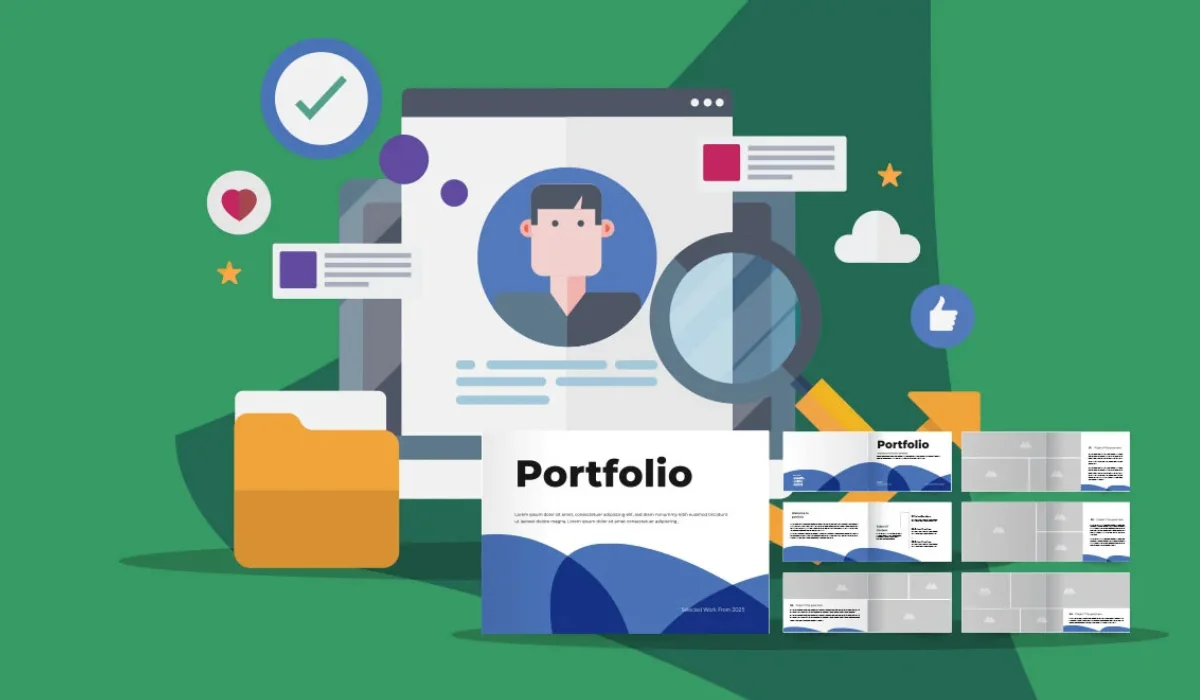
Tips for Building a Strong Beginner Portfolio
- Keep it simple and organized: Focus on clarity rather than quantity.
- Highlight your best work: Quality matters more than the number of projects.
- Show your process: Clients value knowing how you think, not just the final result.
- Update regularly: Add new skills, certifications, and projects as you grow.
Final Thoughts
Encouraging satisfied clients to share their experiences can play a powerful role in growing your business both online and offline. Ask your happy customers to leave feedback on platforms such as Google, industry-specific directories, and popular social media channels where potential clients are likely to search for your services. When clients leave genuine, positive reviews, they serve as social proof of your professionalism and the quality of your work. These testimonials do more than just highlight customer satisfaction—they also contribute significantly to your online visibility by boosting your SEO and signaling to search engines that your business is trustworthy and credible.
For new or undecided customers, reviews act as a deciding factor. People often trust the opinions of past clients more than advertisements, which means each review directly impacts your reputation and persuasive power. A consistent collection of positive reviews demonstrates reliability, builds confidence among prospects, and reassures potential customers that they are making the right choice in choosing you. Over time, this reputation strengthens your local market presence, improves your ranking in local searches, and increases the likelihood of attracting loyal, high-value clients who may recommend you further.